


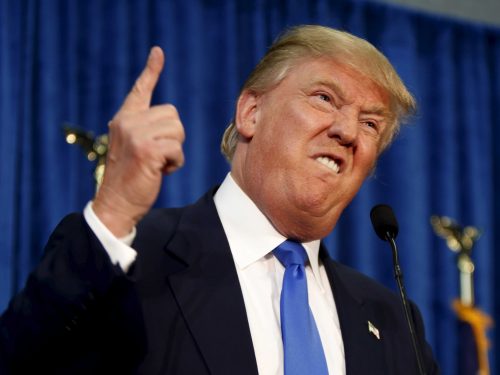
It’s to be hoped that Prime Minister Prayut Chan-o-cha goes to Washington next week for his chat with United States President Donald Trump keeping in mind that, while good international relations boil down to give and take, a sweet deal for Thailand could be the crown in his career.
Surely that dawned on Prayut and his advisers during the lengthy delay between receiving the invitation and scheduling the trip.
Prayut will be the third Southeast Asian leader to pay an official visit to Washington since Trump took office in January. Prime ministers Nguyen Xuan Phuc of Vietnam and Najib Razak of Malaysia preceded him in May and mid-September, respectively.
Trump is seeking to strengthen relations with America’s allies in this region to counter China’s rapid progress. The get-togethers come amid continuing territorial disputes in the South China Sea and the very real threat of a military confrontation with North Korea.
Unlike Barack Obama, his predecessor, Trump is prepared to set democratic values aside both in governance and foreign affairs. He is equally comfortable engaging with “friendly dictators” and dismissing fully democratic leaders.
General Prayut would have been more than happy to accept the invitation to the White House, since it indicates acceptance of his 2014 coup by the West’s predominant power. Obama offered no such balm to Thailand’s military-run government.
Within his first 100 days in office, Trump also invited to Washington Philippines President Rodrigo Duterte and Singapore Prime Minister Lee Hsien Loong. Neither one was thrilled with the call. Neither one feels the need for Washington’s approval.
But the Thai junta wants that “recognition”, seeing it as a nod to legitimacy in the absence of an electoral mandate. Obama’s open disdain for Prayut’s coup soured relations between our countries and forced the generals to lean heavily on China.
Now, with a president in the Oval Office who cares little about democracy and human rights, Thailand has much to gain beyond the illusion of legitimacy in the eyes of the world.
The chief concerns for the Trump administration in its dealings with Southeast Asia are countering the rise of China – politically, economically and militarily – and accruing benefit for American businesses.
Vietnam’s Phuc came back from Washington having witnessed 13 transactions signed with the US Commerce Department worth a combined $8 billion (Bt266 billion). Vietnam agreed to import $3 billion worth of American goods, a deal that would support 23,000 American jobs.
Malaysia’s Najib arrived at the White House facing a chancy re-election bid next year amid the 1MBD scandal, which the US Justice Department is looking into. He promised Trump that Malaysia Airlines would buy 25 Boeing 737 jets and eight 787 Dreamliners and probably would want another 25 737s in the near future. That high-flying swathe of pre-orders could be worth $10 billion within five years.
Prayut heads to “the Land of the Free” with no indication of what sort of business arrangements might be made. Washington has hinted that it wants to balance bilateral trade with Thailand by boosting exports.
It wants Thailand to buy more US military hardware instead of always shopping in China. And of course Trump wants Prayut to shut down North Korean front companies in Thailand.
In exchange, the president is willing to ignore the suppression of democratic rights here. It’s hardly a fair deal for the Thai people.
(Source:The Nation, Thailand)