
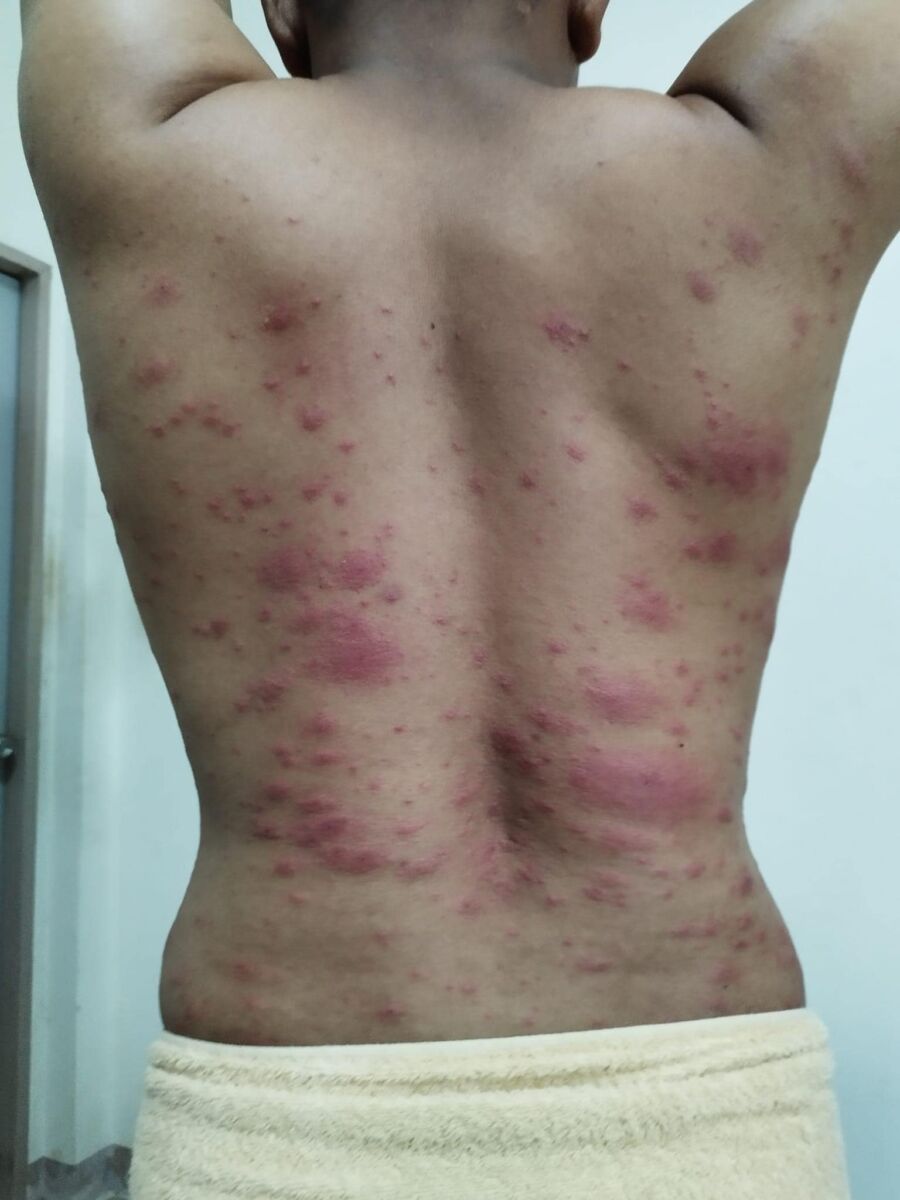
A Thai man experienced an unexplained skin rash, initially suspected to be shingles, but the prescribed treatment did not work. Another hospital later suggested that the rash could be caused by an environmental allergy. The situation gained attention on social media, where users expressed concern and shared their thoughts about this unusual condition.
A Facebook page called ‘Ee Sor Ka Yhee Khao 2’ shared photos of a patient with a severe rash that had no clear cause. The first hospital initially thought it was shingles, but the treatment proved ineffective, leading to a switch of hospitals. The post attracted significant attention, with many users expressing their concerns and opinions about the ailment.
Today, reporters visited Suranaree, Mueang Nakhon Ratchasima District, Nakhon Ratchasima, to interview 28-year-old Wacharaphorn, the girlfriend of the 29-year-old patient, Chanachai. Wacharaphorn disclosed that her boyfriend’s rash started on May 4, but they were unsure about its cause. Chanachai is usually involved in gardening, tree cutting, and house cleaning. His symptoms first appeared after removing wallpaper during a renovation project, which led him to suspect an allergy to the wallpaper dust, as reported by Sanook.
After four days, the rash spread, and Chanachai started feeling unwell, possibly with a fever. Concerned, he decided to visit a hospital where the emergency room staff asked if he had Covid-19 due to his high fever and similar symptoms. Since Wacharaphorn had recently recovered from Covid-19 herself, Chanachai thought he might have contracted the virus. However, Chanachai tested negative, and the doctor diagnosed him with shingles. He took medication, but his condition did not improve, prompting them to explore other possible causes for the rash.
Since there was no improvement following the first hospital visit, Chanachai and Wacharaphorn sought treatment at another clinic in Korat. The doctor at the clinic gave him an injection and prescribed medication for skin conditions, which slightly relieved the itchiness. However, Chanachai still had a high fever, so they decided to try another hospital. There, he underwent various tests, including X-rays and blood tests. Initially, the doctors considered admitting him, but as his fever subsided and blood tests came back normal, they concluded that his symptoms might be due to an environmental allergy.
Over the course of two weeks, Chanachai’s condition gradually improved. Wacharaphorn believed that it was indeed caused by an environmental allergy, possibly triggered by activities like wallpaper removal, grass cutting, or exposure to household dust. The itchy rashes have disappeared, leaving only faint, brown marks on Chanachai’s skin. The doctor advised him to continue using skincare products, and the marks should fade with time. Wacharaphorn expressed relief that her boyfriend is now on the path to recovery, comparing his current situation to the initial alarming symptoms.