


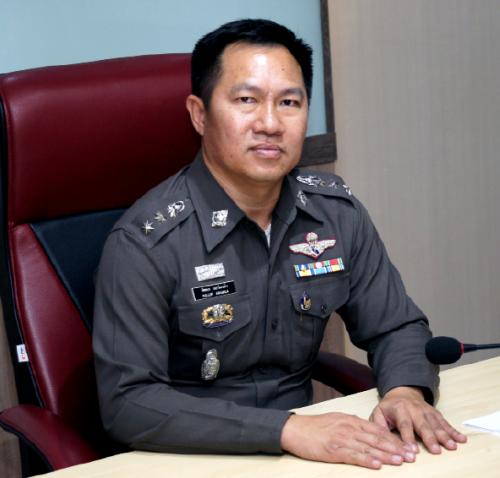
It takes 30 to 40 minutes to drive from the center of Bangkok to the Bang Phli police station in Samut Prakan province, where Police Colonel Dr Pullop Aramhla, the station’s Superintendent, gave an extensive and candid interview. He also allowed an interview with rank-and-file police and granted unlimited access to a modern, well-equipped police station, which has signs in both Thai and English and is divided into five sections: Investigation, Inquiry, Patrol, Traffic, and Administration.
Speaking good English, Pol Col Pullop was extremely frank during a long conversation in his modest second floor office. “We cover 150 square kilometers with about 200,000 people, including about 60,000 migrant workers from Myanmar, Cambodia and Laos who are employed at the many factories in the area,” said the superintendent, who has a doctorate in Philosophy.
|
“The station has 140 policemen and 10 policewomen, and this is not enough. We are understaffed, and therefore everyone assigned here, including me, has to work hard and long hours to fulfill our responsibilities as expected by the public and the RTP. I have been here for 16 months and before that I was attached to the Samut Prakan Provincial Police Division headquarters for three years. Sixteen months is not long enough to accomplish what I want to do, which is to educate the law enforcement professionals here and bring crime under control in the district.
|
“As superintendent I am responsible for every police officer here. My mobile is on 24/7. Sometimes I get a call at 2am to come to the scene of a deadly accident. It is non-stop work, and not just for me. Anyone who puts on an RTP uniform has a difficult and dangerous job. Unfortunately, all too often criminals make a choice to take out a gun and start shooting to try and avoid arrest.
“We don’t have set working hours like employees of a private company. We can’t say ‘it’s 4.30pm and I’m going home.’ Our hours depend on the number of cases and overall security situation in the district. And since there are always so many cases coming at us the reality is that we are subject to be called to report for duty at any time, with no extra pay, for weekends or public holidays,” said Pol Col Pullop, adding that police pay the same income tax rate as people who work in the private sector.
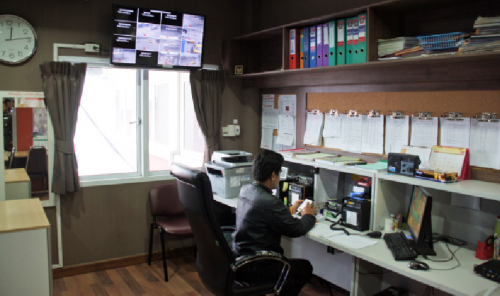
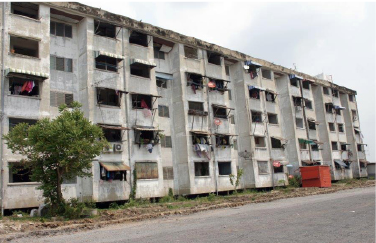
Police must buy their own motorcycles if they are needed for the job. Those who live away from the station must have some form of private transportation so they can respond quickly in an emergency. The cost of the basic equipment like uniforms, decorations, handguns, transceivers, handcuffs, hats and belts also comes out of their own pockets. A good handgun is expensive and costs around 70,000 baht. Some police don’t have a gun because they just can’t afford it. Handguns can be purchased by installment through the police cooperative, however.
The superintendent explained that if someone commits a major crime in his district and runs away to Chiang Mai, for example, police stationed at Bang Phli are responsible for apprehending the criminal. “We have to follow them, and this could mean contacting relatives wherever they may live. The government gives us some budget for this type of circumstance which includes transportation, accommodation and food, but often it is not enough. In such cases we have to use money budgeted for essential purposes in order to succeed with the investigation and arrest the suspect.
“The government’s budget allocation for fuel for our 20 police cars and motorcycles is often not enough either. Usually the budget for petrol runs out sometimes after the 20th of the month, so we have to find the money elsewhere. Often I pay from my own pocket.”