


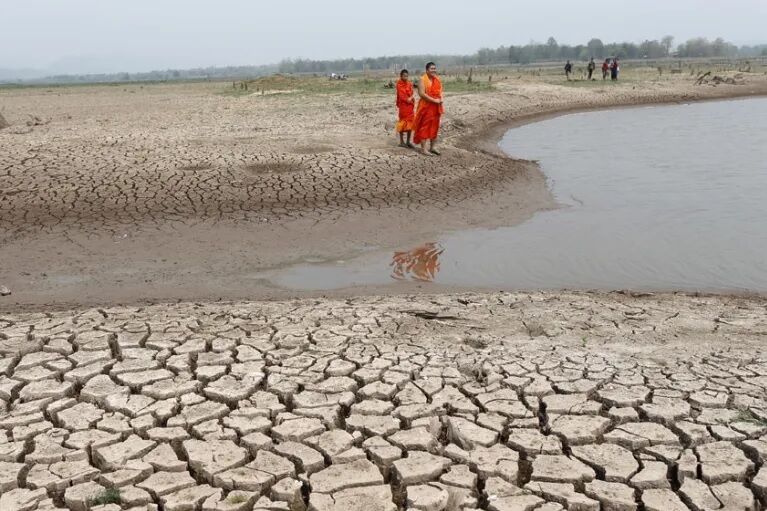
Nakhon Ratchasima province is grappling with a severe drought crisis as its medium-sized water reservoirs are now at concerning levels, holding less than half of their capacity. To address this issue, a suspension of off-season rice farming has been mandated, and urgent talks are in progress to secure water reserves for the upcoming dry season.
The water situation in the province’s reservoirs was reported by the Nakhon Ratchasima Irrigation Project’s water allocation division. Findings reveal that the four large reservoirs have less than 60% of their water remaining. The Lam Phra Phloeng reservoir in Pak Thong Chai district is an exception with 67.32% of its water, deemed sufficient for domestic use this year.
However, the concern lies with farmers who depend on these water sources. The irrigation project has convened a meeting with water user groups, urging cooperation from downstream farmers to cease off-season rice cultivation. The quantity of water is inadequate and must be conserved for use throughout the impending dry season.
Of particular worry are the numerous medium-sized reservoirs scattered across various districts in Nakhon Ratchasima province, with less than 50% of their water remaining. The Lam Phra Phloeng Reservoir in Pak Thong Chai District, for instance, is at its lowest with 29.39% of its capacity. Additionally, the reservoirs in Sida district face similar challenges, with Huay Hin Reservoir at 35.18%, Huay Toei at 39.99%, and Lam Plai Mat at 44.52%.
Another significant medium-sized reservoir, Huay Bong reservoir in the Prasuk subdistrict, Chum Phuang district, has 47.81% of its water remaining, of which 44.93% is usable. Given this precarious situation, several districts are now at risk of drought, sparking ongoing discussions in Nakhon Ratchasima province regarding strategies to tackle the drought effectively. Furthermore, there’s a plea for cooperation from downstream farmers to refrain from off-season rice farming and preserve water for use during this year’s dry season.

