
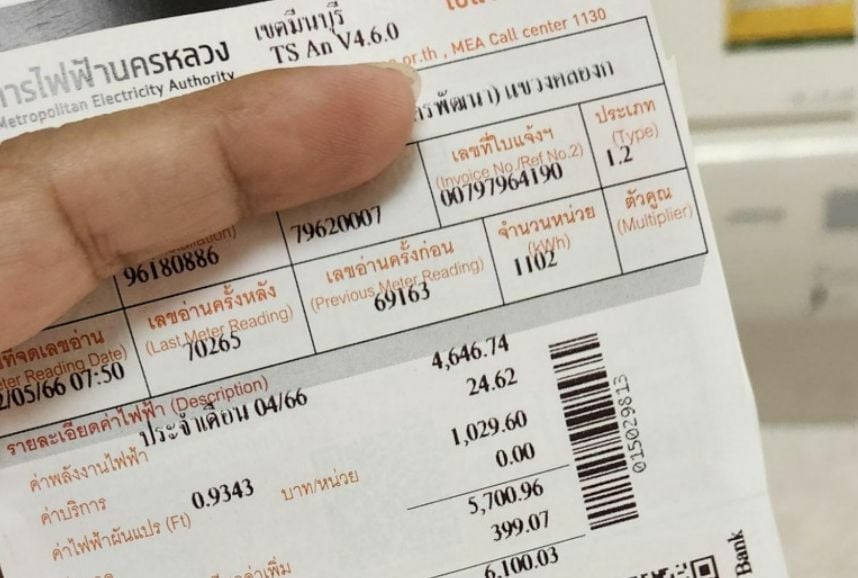
The Thai government, led by Srettha Thavisin, has rapidly endorsed a proposal to decrease the electricity tariff, aiming to reduce the costs of electricity for the general population.
The tariff rate has been modified from 4.45 baht to 3.99 baht per kilowatt-hour, effective from September through December of this year. However, to address the persistent issue of high electricity expenses, it may be essential to restructure the pricing framework for energy in Thailand.
Energy Minister Pirapan Salirathavibhaga has suggested a prompt solution by extending the repayment period for debts owed to the state-owned Electricity Generating Authority of Thailand (EGAT). This adjustment could be implemented by September, avoiding the lengthy deliberation process required for alternative solutions. The new tariff rate was proposed by Pirapan after discussions with the Energy Regulatory Commission (ERC) and received cabinet approval on September 18.
On September 20, the ERC held discussions with EGAT and PTT Plc to explore the implementation of the power tariff policy. Part of the plan involves EGAT revising its debt management, while PTT is expected to lower its gas sales prices from 323.37 baht per million British thermal units (BTU) to 304.79 baht per million BTU.
The previous power tariff of 4.45 baht per unit, scheduled for September through December, was determined based on three factors: reduced gas prices, public sentiment, and the need to compensate EGAT, which incurred a 150 billion baht loss due to subsidizing electricity bills from September 2021 to December of the previous year. This subsidy was primarily aimed at alleviating the financial burden on individuals and businesses resulting from the Russia-Ukraine conflict, which led to a surge in global gas prices. Nevertheless, the reduction in the power tariff to 3.99 baht per unit will extend the timeframe for EGAT to settle its debts.
EGAT had previously argued that further reducing electricity bills in the last four months of the year would adversely affect its future investments in power infrastructure. This indicates that a restructuring of Thailand’s energy pricing system may be necessary to establish a more sustainable solution for high electricity costs.
An anonymous former senior energy official has proposed several approaches to achieve this, including managing gas prices, entering into more long-term liquefied natural gas (LNG) purchase agreements, developing a new petroleum site in the overlapping claim area (OCA) in the Gulf of Thailand, and increasing power imports from Laos.
The Federation of Thai Industries (FTI) has welcomed the cabinet’s approval of a lower power tariff but has urged the government to make changes to the Thai energy pricing structure to establish a more sustainable solution for high electricity bills.