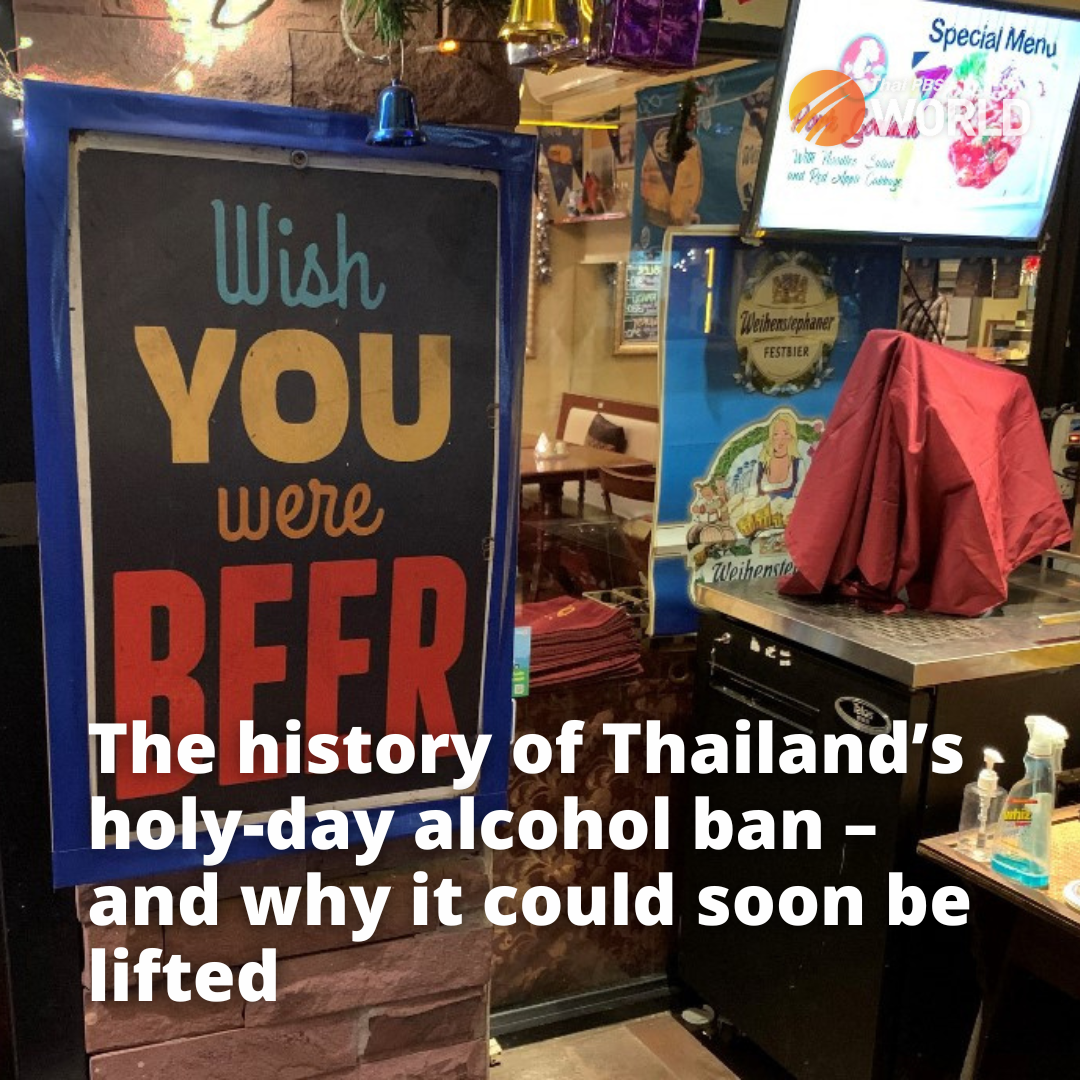

The Move Forward Party has provided a glimmer of hope for individuals who have long been frustrated by the alcohol ban imposed during religious holidays. If the party forms the new government, they have promised to abolish the ban. Amarat Chokepamitkul, a party-list MP for Move Forward, reaffirmed this policy after the recent enforcement of the ban on Visakha Bucha Day, which resulted in the silence of Thailand’s typically lively nightlife and affected businesses nationwide.
In Thailand, the authorities prohibit the sale of alcoholic beverages on five religious holidays, including Visakha Bucha, which commemorates significant events in the life of Lord Buddha and promotes abstaining from intoxicants as one of the Five Precepts observed by Buddhists. However, while Buddhism is the predominant religion in Thailand, the country is also home to people of various faiths and those who do not follow any religion. Furthermore, not all Buddhists willingly adhere to the alcohol abstention on their sacred days.
Violators of the ban face the risk of imprisonment for up to six months and/or a fine of 10,000 baht. Taopiphop Limjittrakorn, a Bangkok MP from the Move Forward Party, argues that the government should operate as a secular state rather than imposing the beliefs of one religion on the entire Thai population. He emphasizes that Thailand is a multicultural country, and lifting the ban would uphold freedom of faith and occupation as enshrined in the Constitution.
Amarat also highlights that most other countries do not enforce similar bans, except for theocracies. She suggests that if the government is concerned about drunk driving during holidays, alternative measures such as setting up checkpoints to test drivers for alcohol could be implemented.
According to a survey conducted by Rangsit University, more than half of the 412 respondents from Generation Z (aged 18-25) expressed a desire to see the ban lifted, while only 30.6% wanted it to remain. The remaining participants chose not to comment.
The ban originated in late 2007 when the government formed by the Council for National Security, following the 2006 coup, passed the Alcoholic Beverages Control Bill. Subsequently, the government under Abhisit Vejjajiva issued a ministerial regulation that prohibited the sale of alcoholic beverages on specific Buddhist holidays. The ban was initially applicable to all establishments except hotels. In 2015, the post-coup National Council for Peace and Order government extended the ban to include hotels and added an additional holiday. Only duty-free shops at airports and business-to-business sales were exempted from the ban.
Historically, alcohol had less popularity among Thais due to prevailing Buddhist beliefs, as foreign travelers’ accounts from the Ayutthaya and Rattanakosin periods suggest. During the Ayutthaya Period, drinking alcohol was prohibited among royals and courtiers, although not strictly enforced. King Rama I later implemented a strict law against alcohol consumption, even branding those who violated the ban with a tattoo on their forehead and downgrading them to commoners. However, with increased interactions with foreigners, the ban became less stringent, and alcohol consumption became more widespread.
In 1972, during Field Marshal Thanom Kittikachorn’s tenure, the Revolutionary Council introduced regulations restricting the sale of alcohol in shops to certain hours. This was a response to civil servants frequently being absent from work due to hangovers. People were permitted to purchase alcohol only between 11 am and 2 pm, and then again from 5 pm to midnight. Enforcement of this rule was lax until the proliferation of convenience stores, leading to stricter enforcement after the Office of the Prime Minister issued a regulation in 2015 clarifying the permitted hours of alcohol sales, except for international airports and entertainment venues.