


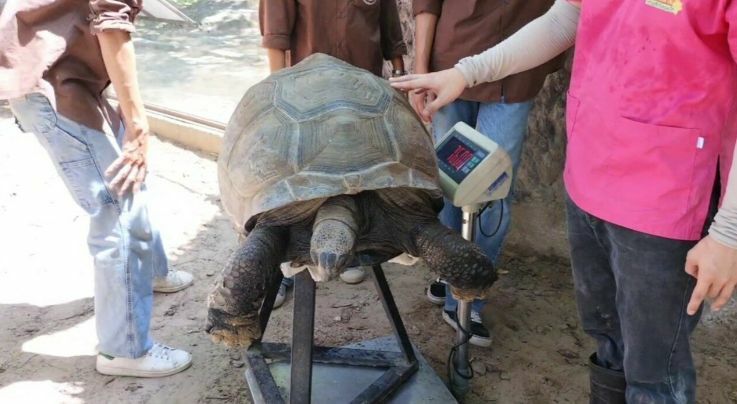
In preparation for the egg-laying season after the breeding period, Khon Kaen Zoo conducted health examinations on various species of tortoises and turtles. Despite some of the tortoises weighing over 70 kilograms, they were found to be in good health.
Khon Kaen Zoo has been dedicated to breeding and conserving different types of tortoises, such as the Aldabran giant tortoise, with two individuals in captivity, along with 26 Sulcata tortoises and four yellow or Radiated tortoises. Additionally, the zoo is home to 50 aquatic turtles, including leaf, softshell, and red-cheeked turtles. The breeding season occurs between February and May, followed by the egg-laying period.
According to Narongwit Chotchoy, the director of Khon Kaen Zoo, the zoo conducts annual health checks on the tortoises following wildlife animal health guidelines. These checks involve administering anti-parasite medication, measuring the tortoises’ weight, and updating their records, which contribute to the individual tortoises’ information within the zoo.
Weighing some of the tortoises can be challenging, especially those like the Aldabran and Sulcata species that can weigh around 70 kilograms. The purpose of these health examinations is to ensure the ongoing well-being of the zoo’s resident tortoises, which continue to be a popular attraction, especially among children and visitors.
While the turtles and tortoises at Khon Kaen Zoo receive proper care, it is important to note that many turtle species, particularly sea turtles, are critically endangered in Thailand. It is estimated that only one in 1,000 sea turtle hatchlings survive to adulthood. Without assistance, many hatchlings perish due to dehydration as they struggle to reach the ocean in time. In Thailand, park rangers play a vital role in safeguarding sea turtle eggs and hatchlings. They often relocate eggs to safer locations and assist in guiding the hatchlings safely into the sea.

